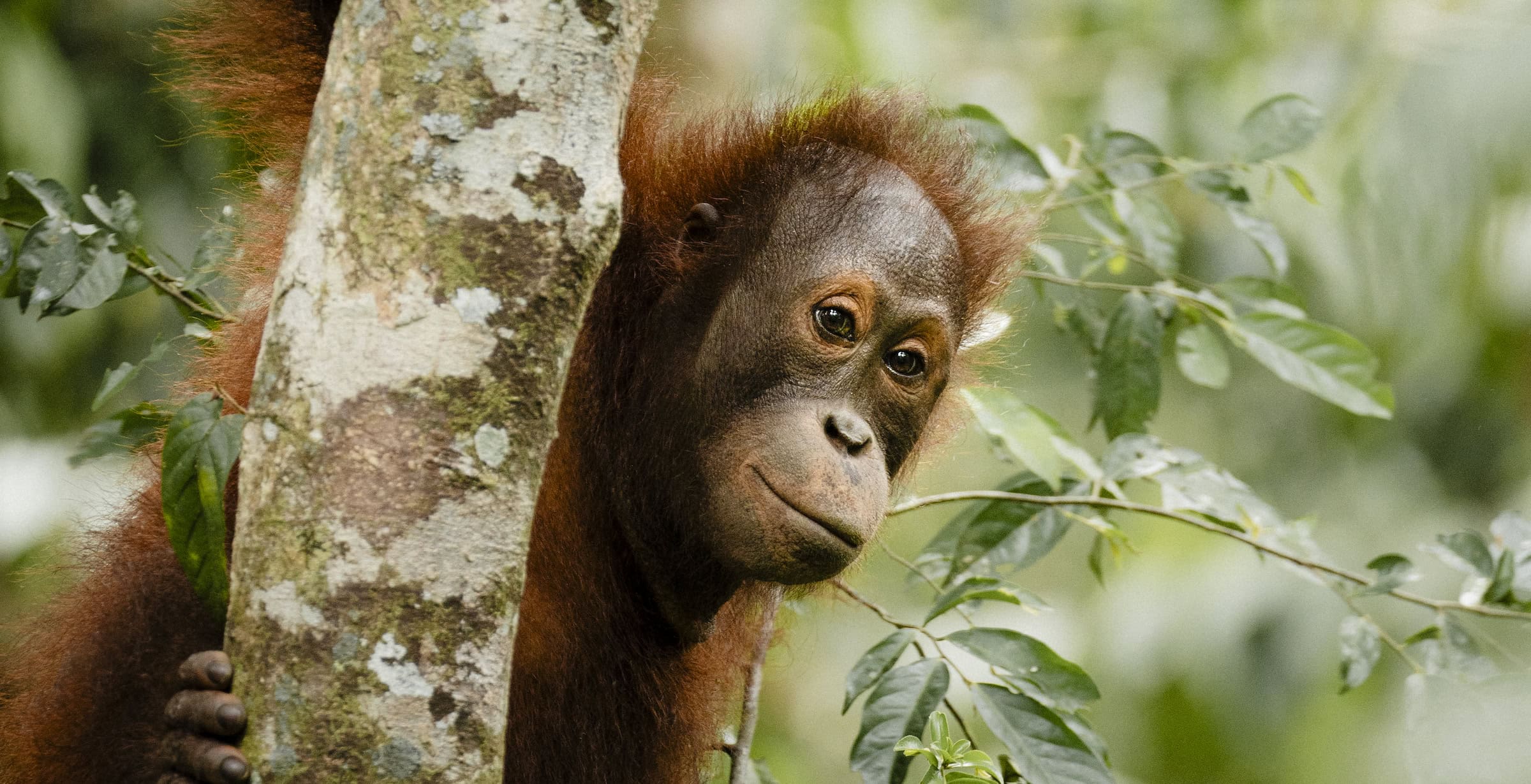
Borneo is one of only two places on earth where orangutans still live wild. This guide focuses on orangutan sightings on Sabah’s East coast, which is the best place to see wild orangutans in Borneo, alongside semi-wild rescues.
Wild or rehabilitated: know what you’re looking at
Sepilok Orangutan Rehabilitation Centre gives you a near-certain sighting, but the animals there are orphans and rescues learning to live independently. Everywhere else on this list, the orangutans are wild, which means no guarantees and a sighting that stays with you. Most of our guests do both by combining a trip to Sepilok with 2 or 3 nights at the Kinabatangan river.
1. The Kinabatangan River — the best odds in Asia
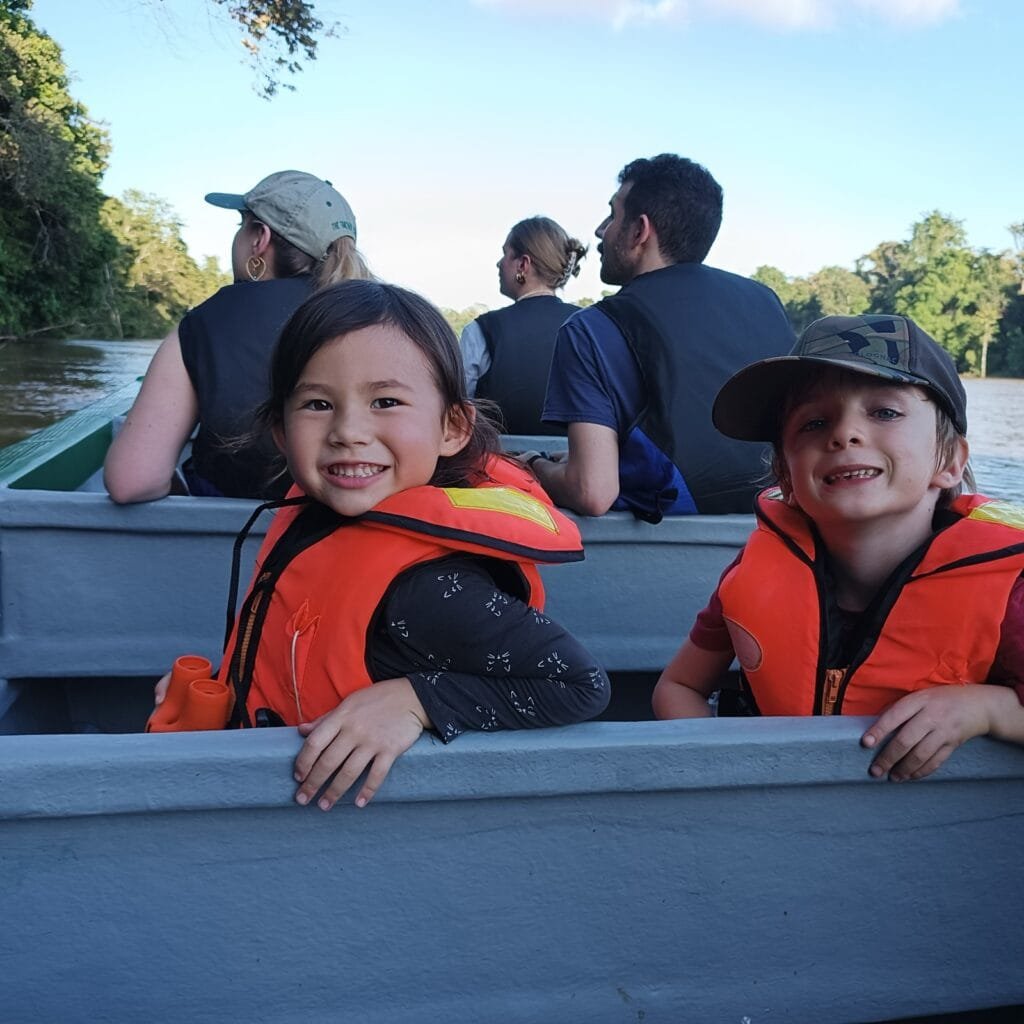
The Lower Kinabatangan is the most reliable place in Borneo to find a wild orangutan, simply because the forest is narrow and the river gives you a moving viewpoint into the canopy. Population density along this stretch is second to none: orangutans, proboscis monkeys, pygmy elephants, langurs, crocodiles and superb birdlife, all spotted from a small boat on sunrise and sunset cruises. We recommend at least two nights, which gives you four cruises plus a night walk and a jungle trek. Accommodation runs from the dormitory and private chalets at Hornbill Lodge, through the community-run Tungog Rainforest Eco Camp, to the villas and plunge pools of Sukau Rainforest Lodge. Read more on our Kinabatangan River page.
2. Danum Valley — orangutans in 130-million-year-old forest
Danum Valley Conservation Area is one of the oldest rainforests in the world, 472 square kilometres of lowland dipterocarp forest where orangutans live in genuinely primary habitat. Sightings are less frequent than on the river because the forest is taller and wider, but they are the real thing: lucky visitors encounter a mother with her baby moving through the canopy above the trail. There are only two places to stay, the simple Danum Valley Field Centre and the luxury Borneo Rainforest Lodge, both 2 to 2.5 hours on gravel road from Lahad Datu. Our Danum Valley page explains the difference.
3. Tabin Wildlife Reserve — orangutans along the trails
Sabah’s largest reserve is known for its mud volcanoes, all eight of Borneo’s hornbill species and excellent 4×4 night safaris, and orangutans are regularly spotted along the jungle trails near Tabin Wildlife Resort. Comfortable river and hill chalets with air-conditioning make this a good choice if you want wild orangutan country without roughing it. See 3D2N Tabin Wildlife Safari and our Tabin page.
4. Deramakot Forest Reserve — for serious wildlife watchers
Deramakot holds an impressive 75 per cent of Sabah’s mammal species, including orangutans, gibbons, pygmy elephants and all five Bornean wild cats. It is a 4×4 destination: seven hours of safari drives per full day, small groups, basic but comfortable chalets. Orangutans are one of many targets here rather than the headline, so choose Deramakot if you want the full mammal list. Note the minimum age of 12 for small-group trips. See 3D2N Deramakot Wildlife Safari.
5. Sepilok — the guaranteed sighting
Opened in 1964, Sepilok is one of the world’s oldest and most respected orangutan rehabilitation projects. Feedings at 10am and 3pm bring semi-wild orangutans to the platform, and the outdoor nursery, where youngsters practise on ropes, is usually the highlight. It sits 30 to 40 minutes from Sandakan airport and on the road to the Kinabatangan, so most river safaris can include it on the first morning. Our Sepilok guide has the practical details, and the 3D2N Sepilok & Kinabatangan River Safari combines both.
How to choose where to see wild orangutans
If you have three nights and want the best chance of a wild orangutan, take the Kinabatangan with a Sepilok stop on the way. If you have five or more nights, add Danum Valley or Tabin for a second, very different forest. The 5D4N East Coast Wildlife Adventure is built exactly that way. For the full picture on which forest suits you, read Choosing a Borneo wildlife destination.
Frequently asked questions
Are orangutan sightings guaranteed?
Never, even at Sepilok the orangutans are semi-wild and may decide not to attend a feeding, especially during peak fruiting-season. That said, it is unusual to go to Sepilok and not see an orangutan. On the Kinabatangan, Danum, Tabin and Deramakot the animals are wild; two nights on the river gives most guests a 50/50 chance of sighting, adding another destination after the river increases your odds further.
When is the best time of year?
Wild sightings occur year-round but increase in frequency during peak-fruiting season. The main fruiting season is June to September with a second season in November – December.
Can children come?
Yes on the Kinabatangan and at Sepilok, with child discounts on most river packages. Deramakot has a minimum age of 12 for group trips, and Danum Valley Field Centre requires a private guide for families with children under 12. See our guide to Borneo with kids.
Do I need to book far ahead?
Yes, there are very few accommodations within most of the areas orangutans are seen and advance bookings are essential. Consider booking at least 6 – 9 months, especially if you are visiting between March and October.