Mount Kinabalu history: a World Heritage Site
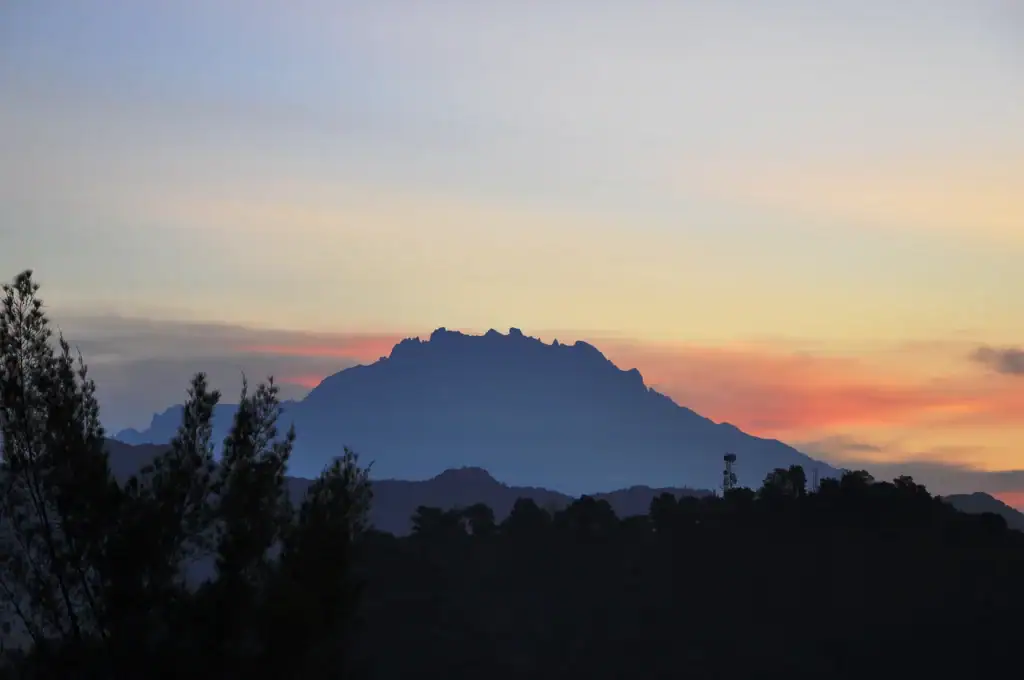
In 1964, Kinabalu National Park was established, protecting 754 square kilometres (291 square miles), covering the entire mountain and much of the surrounding forest for everyone to enjoy for years to come. Kinabalu National Park was Malaysia’s first established park and is both Borneo’s and Malaysia’s first UNESCO World Heritage Site. It was designated for its “outstanding universal values” and because it is one of the most important biological sites in the world, with more than 6,000 species of flora and fauna. It’s easy to see why this mountain has been held in such high esteem since people first stepped foot on the island of Borneo. Sitting at a staggering height of 4,095.2 metres (13,435 ft) above sea level, Mount Kinabalu has the honour of being the tallest mountain between the Himalayas and Papua New Guinea.
The flora & fauna of Mount Kinabalu
Mount Kinabalu is one of the most important biological sites on the planet. Because of its elevation and location on the tropical island of Borneo, it has a wide range of habitats, from rich tropical lowland and hill rainforest to tropical montane forest, subalpine forest and subalpine scrub at the higher elevations.
Climbers can observe multiple habitats in one day, making the climb as suitable for avid naturalists as it is for adventure seekers.
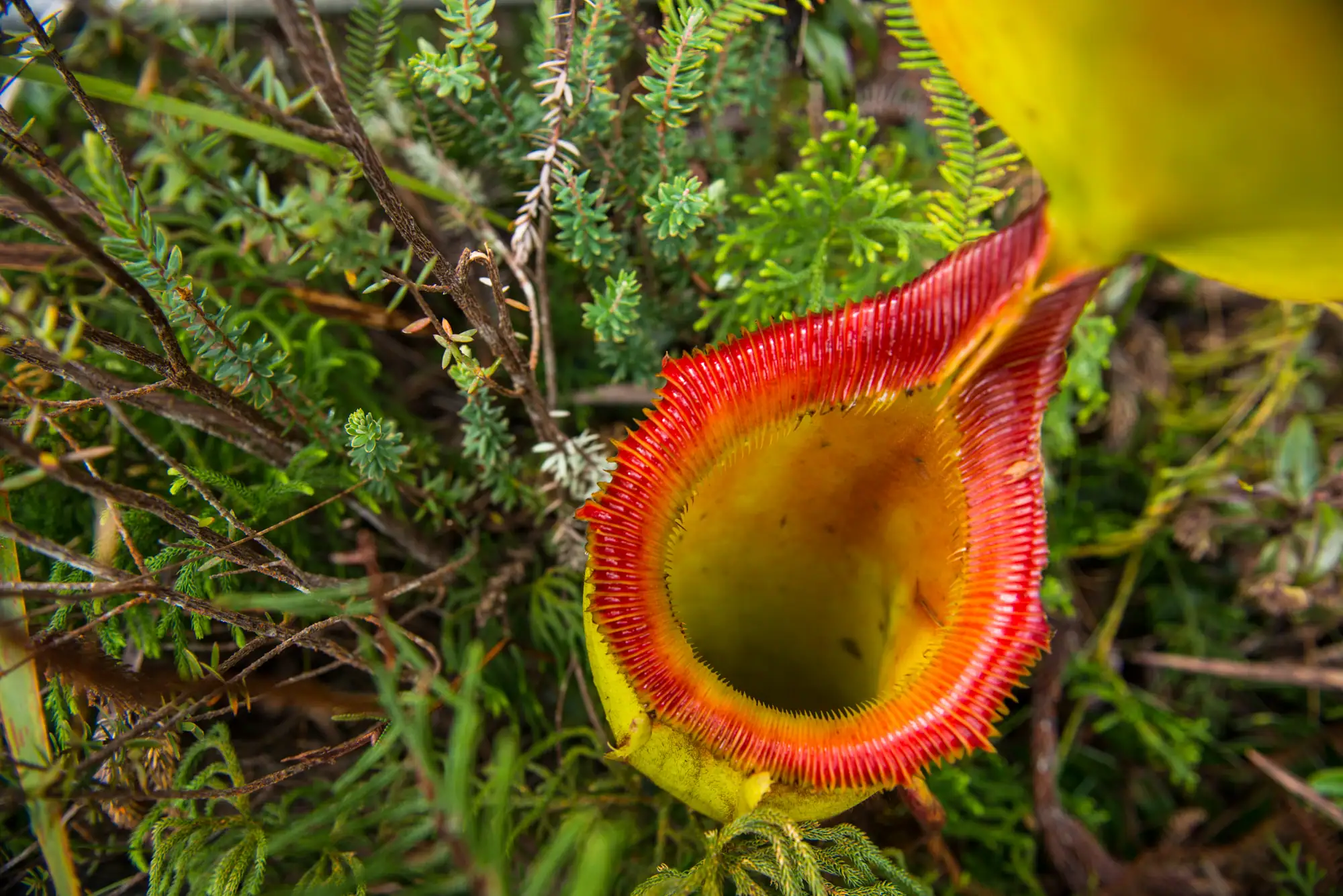
Recent biological studies have found up to 6,000 species of plants on the mountain, more than all the plant species in North America and Europe combined. There are up to 866 orchid species, 609 species of fern, 63 species of oak and chestnut and 14 pitcher plant species, just to name a few.
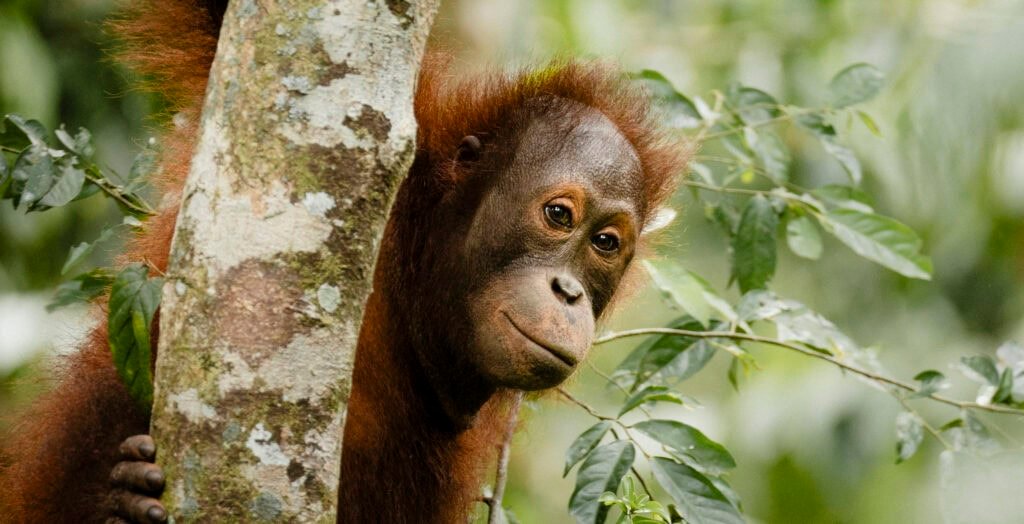
This great variety of plant life is home to an abundance of very interesting animal life. Seeing wildlife here is not like other parts of Sabah, mostly because the larger animals are much more rare on the mountain. So it’s a matter of keeping an eye out for smaller creatures such as birds, small mammals, reptiles, amphibians and insects. There are up to 1,000 moth species, 625 butterfly species, 326 bird species, more than 100 mammal species, 67 species of snakes and so much more.
Culture surrounding the mountain
Mount Kinabalu is considered a very sacred mountain and is a hugely important place spiritually and symbolically for many indigenous people of Sabah, especially for the Dusun, Kadazan and Murut tribes. It is believed that once you pass into the afterlife, your soul must journey to Mount Kinabalu to live peacefully for eternity.
Many believe that this is the reason the name of the mountain is Kinabalu, which is derived from the Dusun word for “resting place of the dead.” Traditionally, there would be long ceremonies held after a death, in order to help guide the spirit to Mount Kinabalu, to make sure they managed to climb the steep slopes and cross the rivers (in some stories it is a lake) that flowed over the granite cliffs.
There is evidence that they would bring things such as knives and other useful objects so that the deceased could find them on their arrival to the slopes of the mountain. Once the deceased reached the top of the mountain, they are said to have lived there peacefully in everlasting life in a place that looked like their traditional land, with family and friends and cattle and pigs.
There is an account from an early European explorer who could never persuade native people to go up the mountain because it was said that a party of Dusun people had once climbed close to the top and, when they reached the edge of the rock, had found a lake with thousands of boats floating all lit up. Scared, the party descended quickly and never went up again.
It wasn’t until 1851 that Sir Hugh Low, an English government officer working in Labuan, made the first recorded ascent to Mount Kinabalu’s summit plateau. He didn’t reach the highest peak on this expedition, but it still later ironically became known as Low’s Peak. The highest point of Mount Kinabalu was reached in 1888 by a zoologist named John Whitehead.
Many early climbers reported that, to appease the spirits of the mountain and the ancestral spirits who live there, their guides would perform ceremonies upon reaching the summit. Sir Hugh Low wrote that his guide carried an assortment of charms, pieces of wood, human teeth and other things up to the summit. Others wrote that eggs and chickens were sacrificed, and others reported that much of this was done with loud prayers, banging of gongs and sometimes gunshots.
Nowadays, a ceremony is conducted annually by the Parks officials, guides and porters. Also, before each climb, many of the guides will ask for permission and say a little prayer before they begin.
Whatever your reasons for wanting to reach Mount Kinabalu’s summit, the feeling of awe and achievement brought on by reaching the highest summit between New Guinea and the Himalayas is sure to not soon be forgotten. See our Mount Kinabalu climbing packages and come and see for yourself!